Skip to content
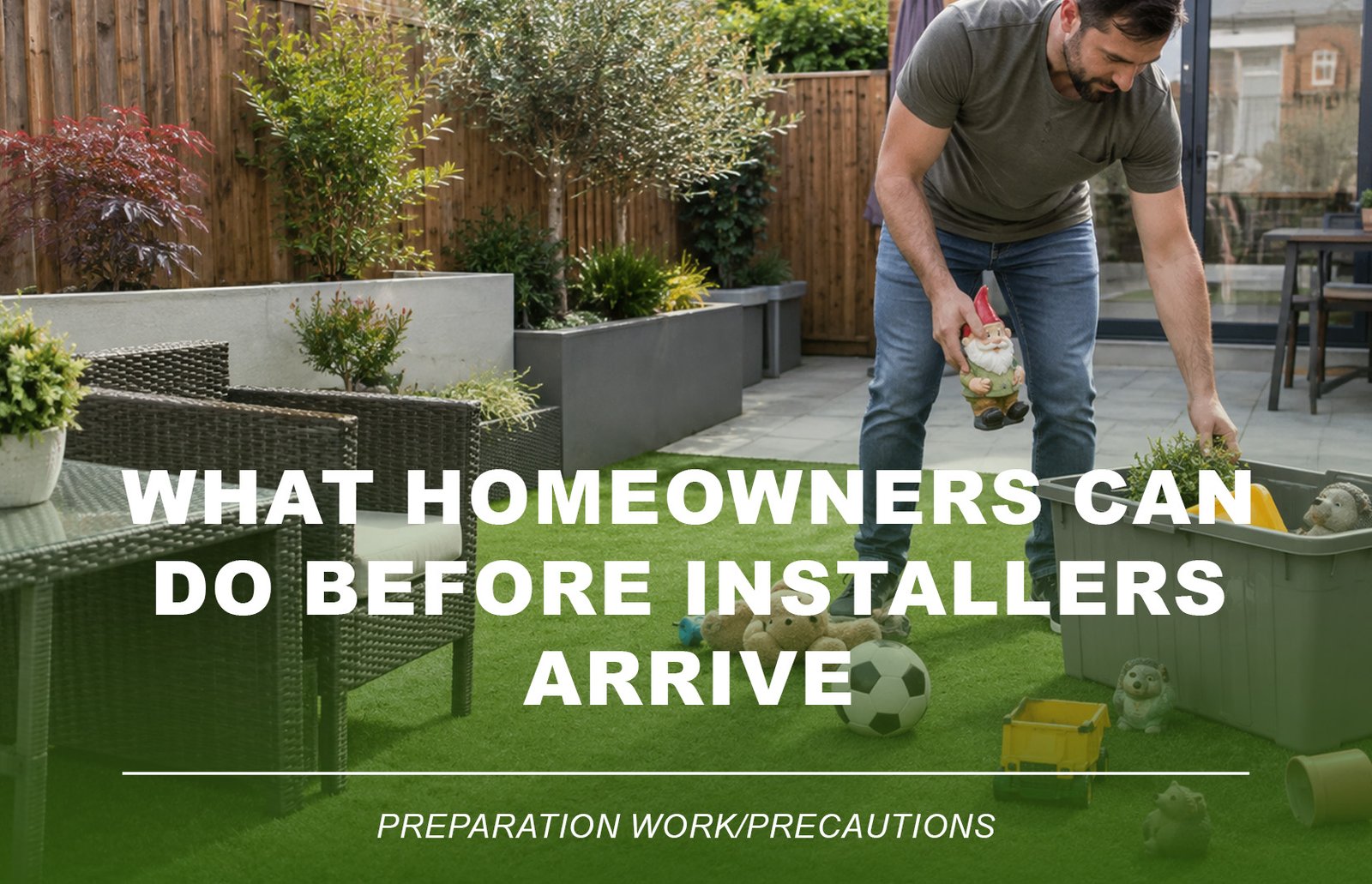
The final quality of an artificial turf installation depends not only on the skills of the installation crew, but also on how well the homeowner prepares the site beforehand.
Proper preparation can significantly speed up the process, ensure a flatter and longer-lasting turf surface, and reduce the need for adjustments or rework during installation.
This guide explains the essential steps homeowners can complete before the installers arrive.
1.Why Preparation Before Installation Is So Important?

(1)Improve installation efficiency and reduce waiting time
A clean, ready-to-work site allows installers to begin immediately.
(2)Avoid rework and ensure a high-quality finish
Identifying issues ahead of time prevents complications during installation.
(3)Eliminating ground issues extends overall turf lifespan
Soil bumps, drainage issues, and leftover debris can affect durability.
(4)Helps accurately evaluate material usage and project time
Better preparation = fewer delays and better planning.
2.Key Tasks Homeowners Can Prepare in Advance
(1) Clear the Surface Area: Remove Debris, Furniture, and Old Materials
Before installation day, homeowners can:



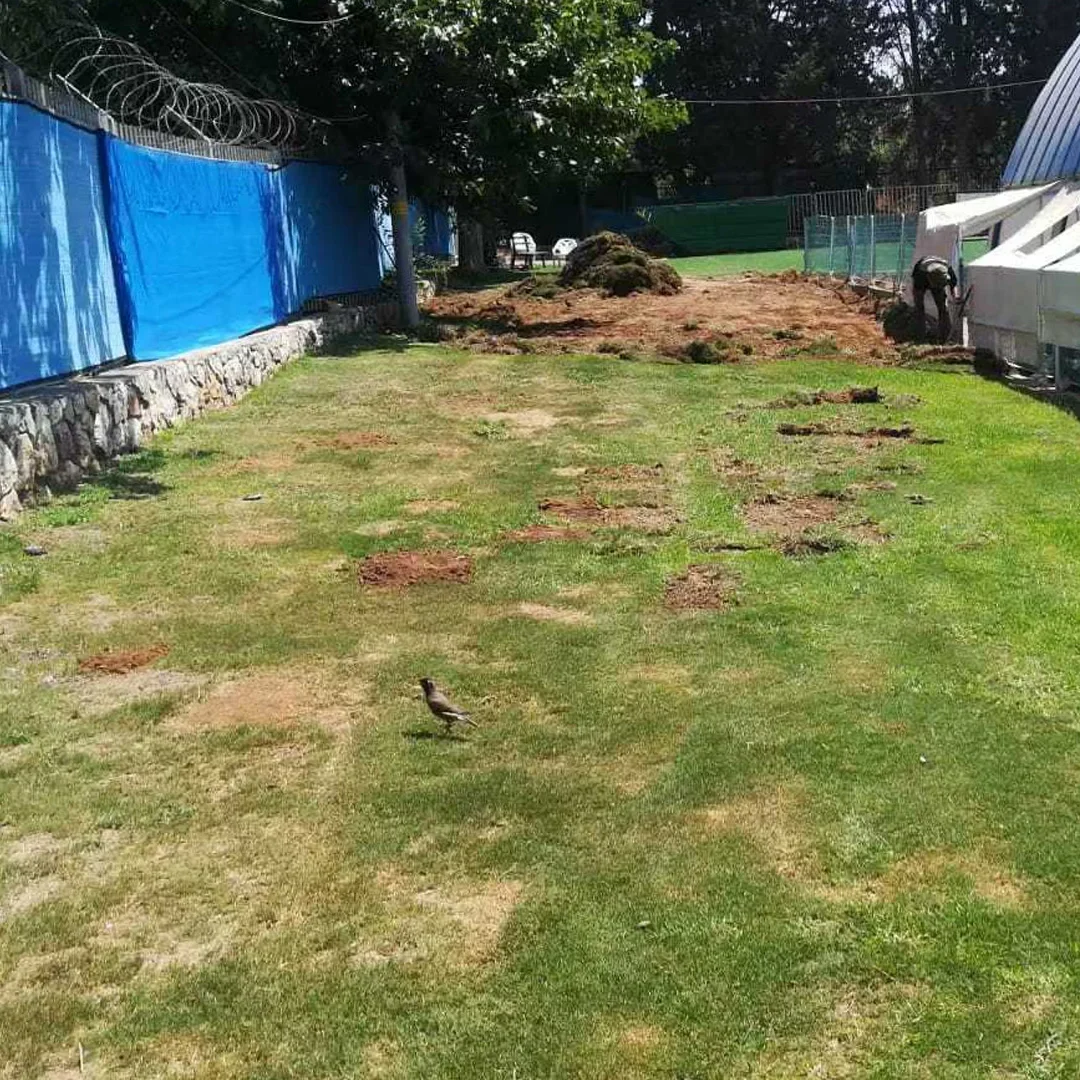
- Remove stones, leaves, sticks, and garden debris
- Move outdoor furniture, toys, planters, and decorations
- Tear up old artificial grass or carpet if possible
- Ensure the area is open and accessible for installers
A clean workspace leads to a smoother, more precise installation.
(2) Check the Drainage Condition of the Area
Before turf installation, evaluate whether:
- Any sections accumulate water after rain
- The area has a natural slope for drainage
- Additional drainage channels or a permeable base might be needed
Fixing drainage beforehand prevents future water pooling issues.
(3)Remove Large Obstacles or Landscape Elements

Certain obstacles can delay installation or affect turf leveling, such as:
- Large rocks or buried stones
- Exposed tree roots
- Old concrete pieces
- Deep dips or elevated bumps in the soil
If some obstacles cannot be removed, mark them clearly for installers.
(4)Complete Basic Measurements or Confirm Dimensions with Installers

Taking preliminary measurements helps ensure accurate material planning.
Measure and confirm:
- Length and width of the installation area
- Borders, curved edges, or irregular shapes
- Whether certain zones are reserved (garden bed, pathway, pet area)
The more precise the measurements, the better the turf fit.
(5)Prepare Power, Water, and Access Routes
Installers need access for tools, cutting equipment, and turf rolls.
Homeowners should:
- Ensure a working outdoor power outlet
- Keep access pathways clear for equipment
- Remove fragile items such as pots, decor, or glass pieces
- Clear driveway or entry area for turf roll delivery
(6)Decide on Borders and Turf Fixing Methods

Before installation day, think about:
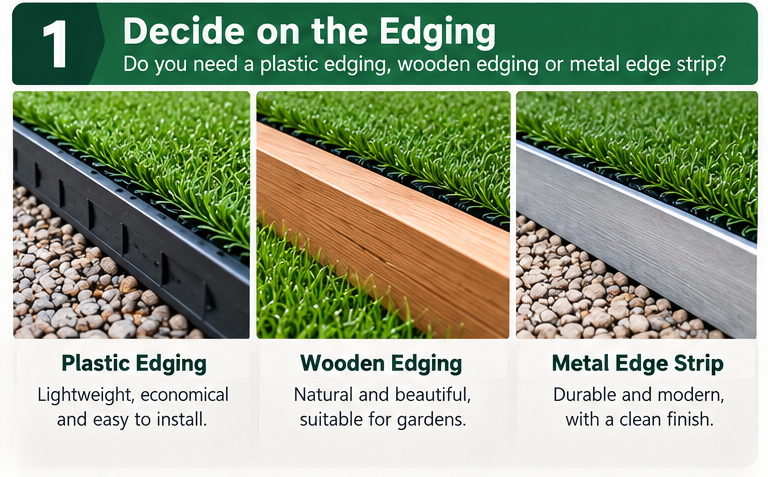
- Will the project use plastic edging, timber borders, or metal edging?
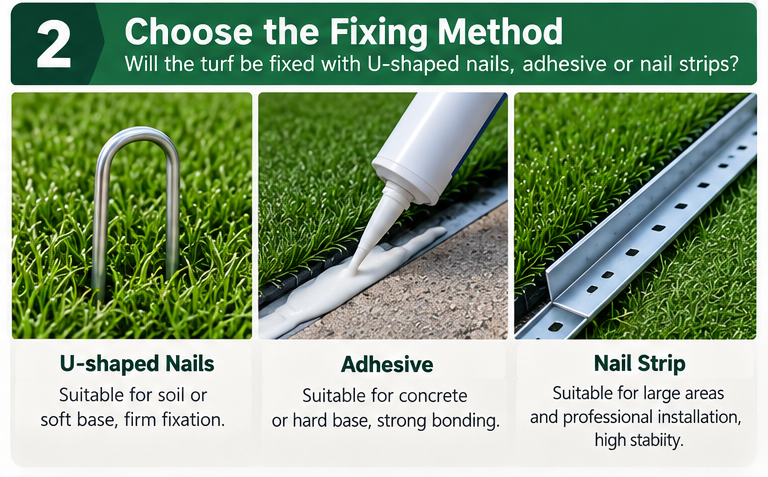
- Will the turf be secured with nails, staples, glue, or edging stakes?
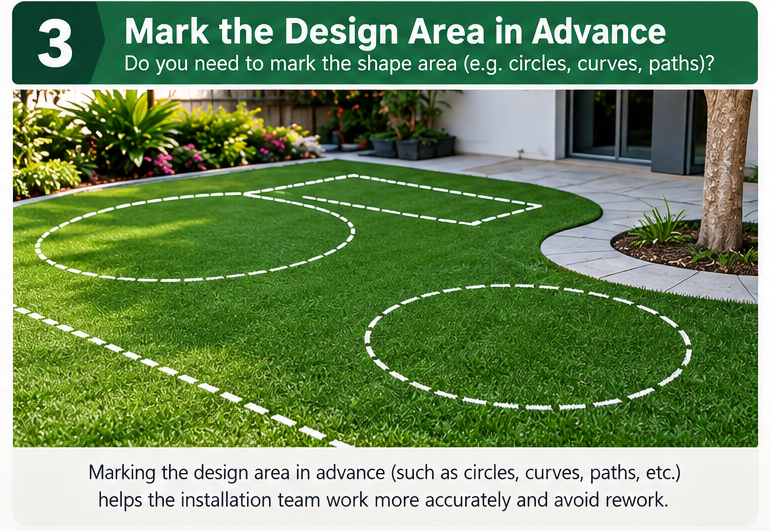
- Do curved areas require additional cutting or design planning?
This helps installers prepare the correct materials immediately.
(7)For Pet Turf Areas: Plan Drainage & Odor-Control Zones

If the turf is intended for pets, it helps to pre-plan:
- Drainage points
- Dedicated pet toilet zones
- Whether deodorizing infill or antimicrobial sand will be used
Proper planning avoids rework after installation.
(8)Prepare a Space for Turf Roll Storage (For Larger Projects)
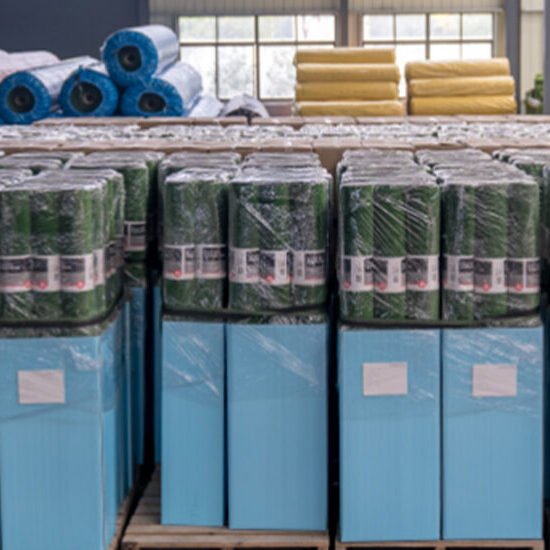
Artificial turf rolls are large and heavy. Homeowners can:
- Clean a flat space for temporary turf storage
- Avoid placing turf rolls under direct sunlight
- Avoid stacking rolls on top of each other
- Leave space near the entrance for easy unloading
Good organization speeds up installation significantly.
3.Common Preparation Steps Homeowners Often Overlook
The following issues frequently slow down installations:
(1)Ignoring drainage → results in future water pooling
(2)Overlooking hidden obstacles → delays leveling work
(3) Not checking power availability → cutting tools cannot operate
(4)No clear access route for heavy turf rolls
(5)Not pre-planning border details or design edges
Avoiding these can drastically improve installation speed and quality.
4.Important Discussions to Have with Your Installation Team in Advance
Before installation day, confirm:

(1)Exact site measurements and design details
(2)Turf model and purpose (landscape / sports / pet)
(3)Whether a shock pad or underlayment is required
(4)Delivery time of turf materials and weather considerations
(5)Whether your area requires installation permits
Clear communication helps prevent misunderstandings.
5.Conclusion: Good Preparation = Faster Installation + Higher Quality Results
Artificial turf installation success is not only about the installer’s skills—
homeowner preparation is equally important.
To summarize, homeowners should:
- Clean and clear the area
- Check drainage
- Remove obstacles
- Measure the site
- Prepare access and utilities
- Confirm design and border choices
- Allocate storage areas for turf rolls