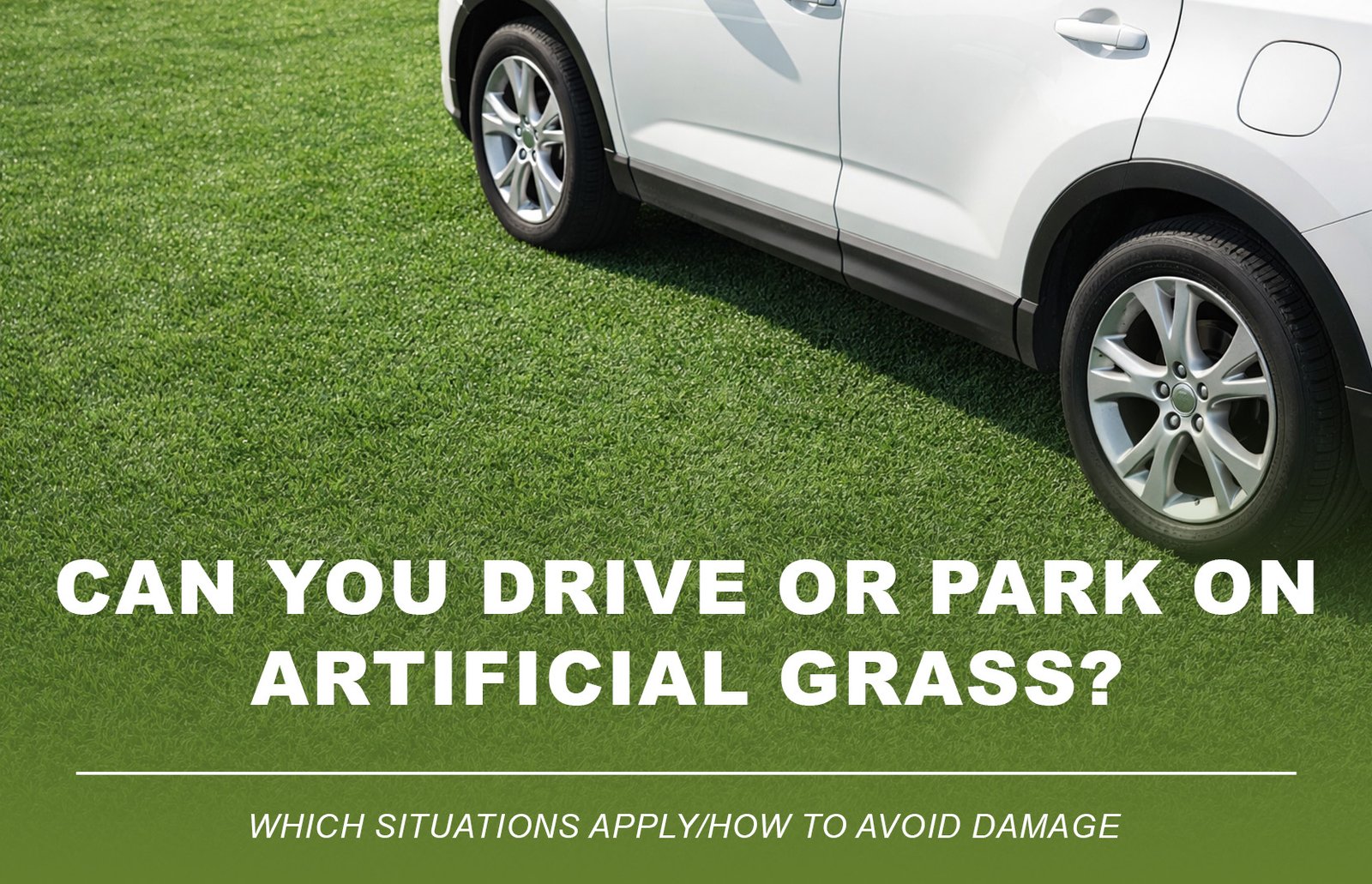
Many homeowners love the idea of a green, clean, mud-free driveway — and artificial grass looks like the perfect solution. This leads to the biggest question:
1.Can a car drive or park on artificial grass?
Here’s the clear answer:
Cars can drive over artificial grass, but artificial grass should not be used as the main load-bearing driveway surface.
It can only work if the base is properly reinforced, and the grass is treated as a decorative surface — not the structural layer.
Incorrect installation or direct parking will cause depressions, tearing, fiber flattening, drainage issues, and rapid lifespan reduction.
This guide explains when artificial grass can handle vehicles, when it cannot, how to build a reinforced base, and the correct ways to use turf in driveways or parking areas.
2. Quick Answer: Yes and No
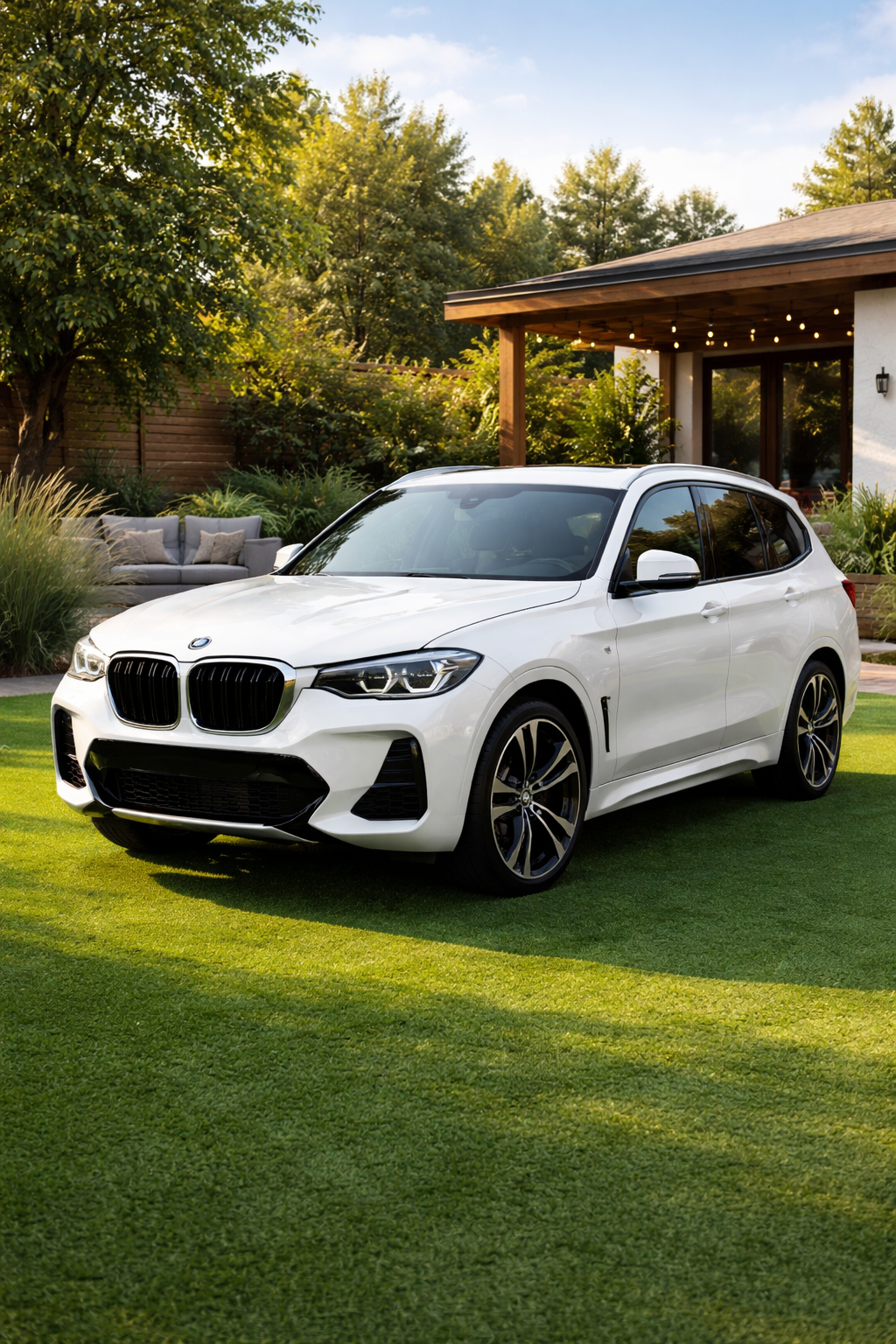
✔ Yes — When Used Over a Reinforced Base
Grass is only the surface finish, not the load-bearing structure.
✘ No — Standard landscaping turf cannot take vehicle weight
Normal turf is not designed for compression, tire torque, or long-term parking.
3. Why Regular Artificial Grass Cannot Handle Cars
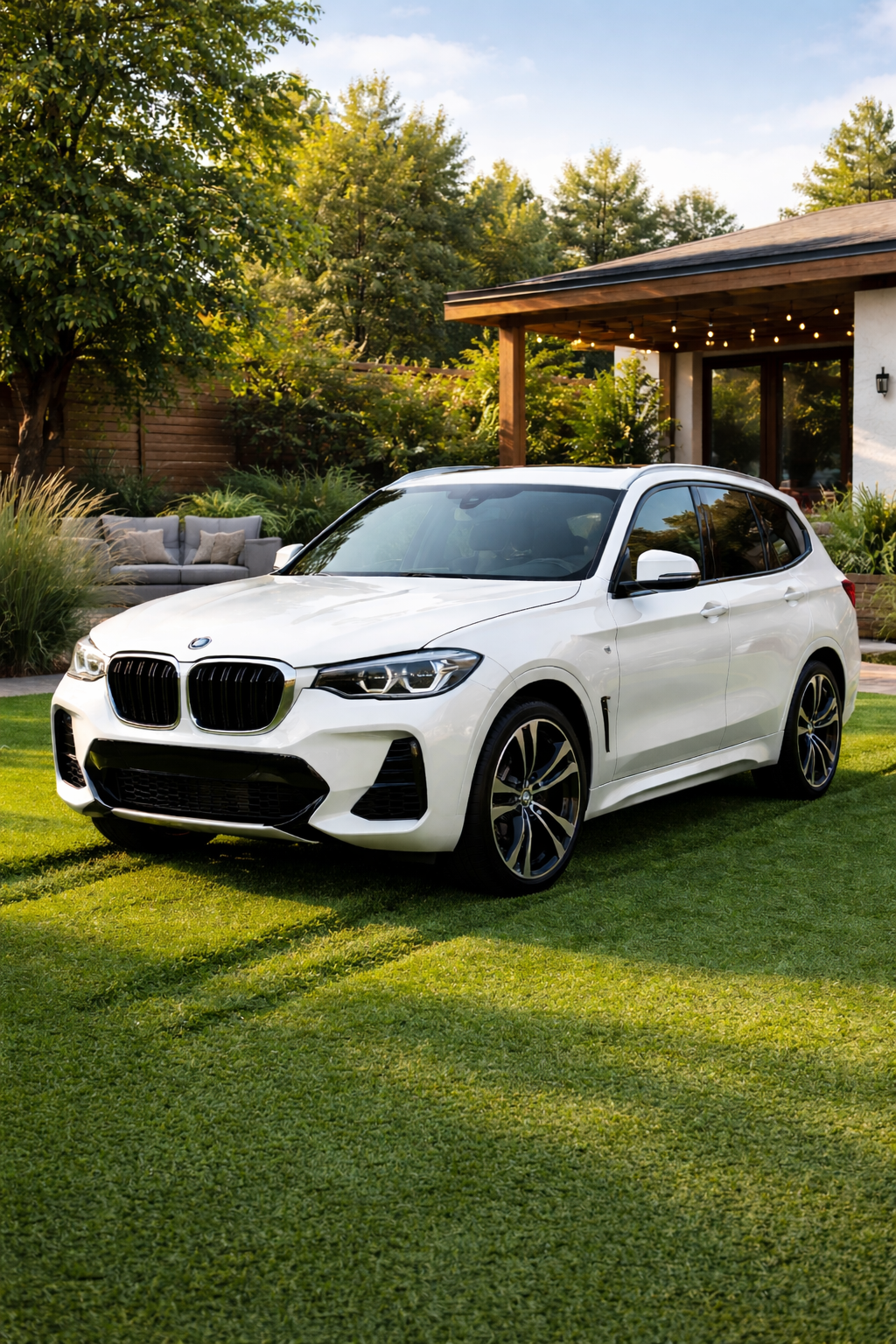
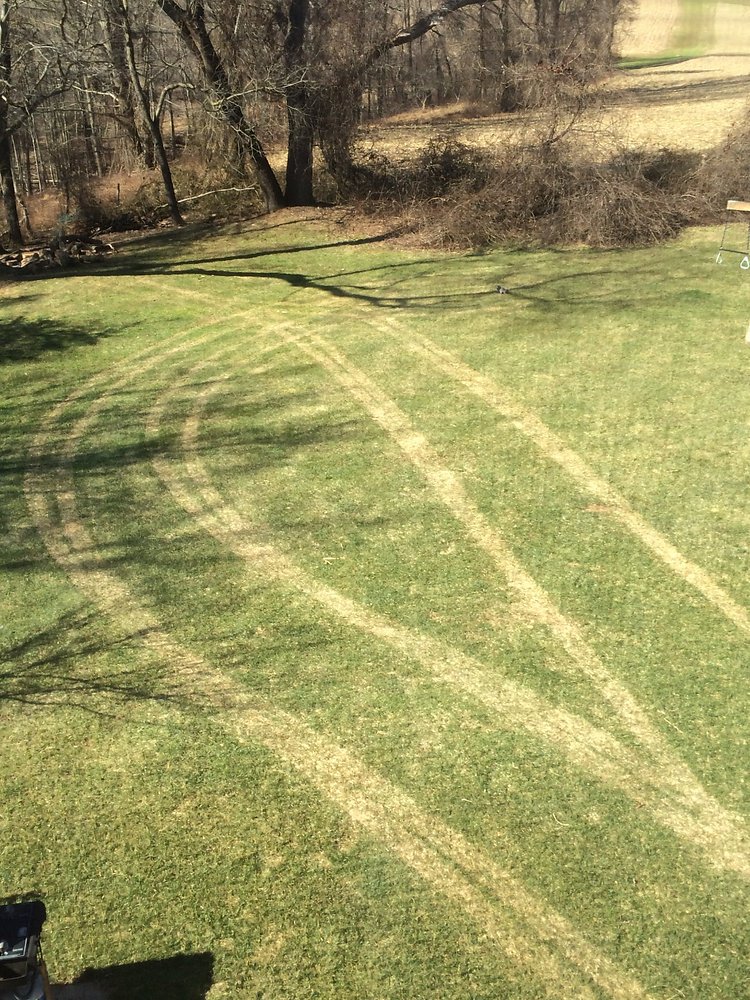
Unreinforced ground sinks under tire pressure.
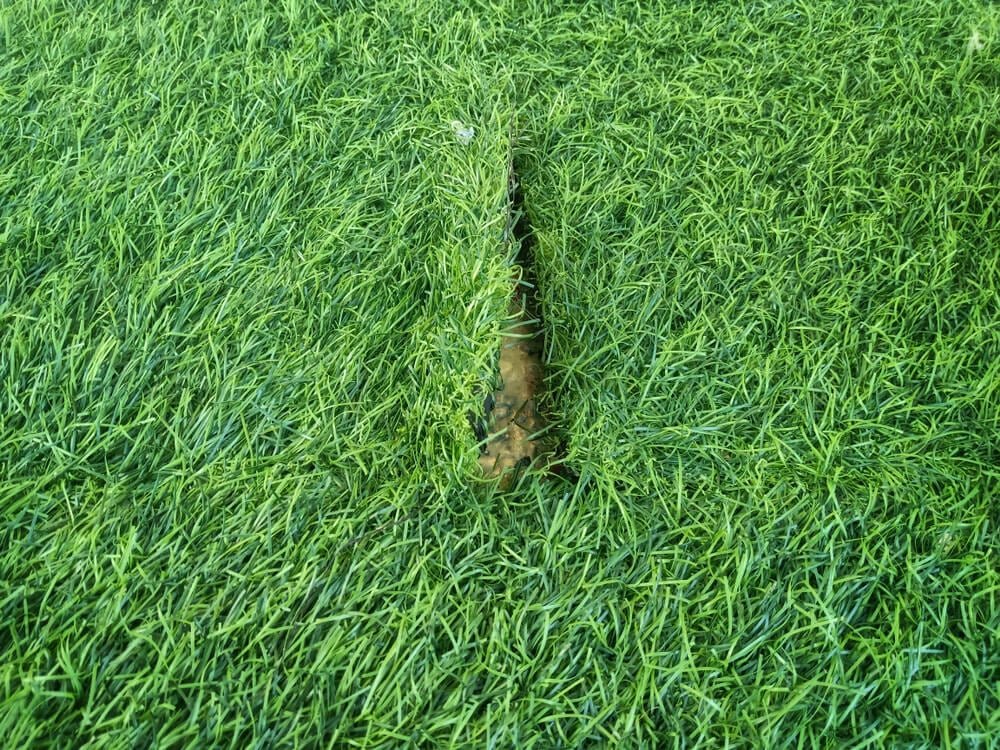
Especially when turning the steering wheel in place.
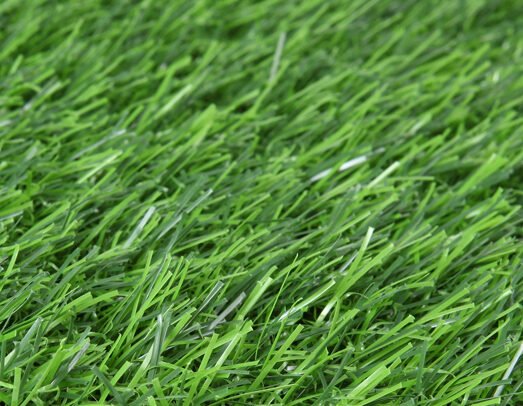
Appearance quickly deteriorates and never fully recovers.
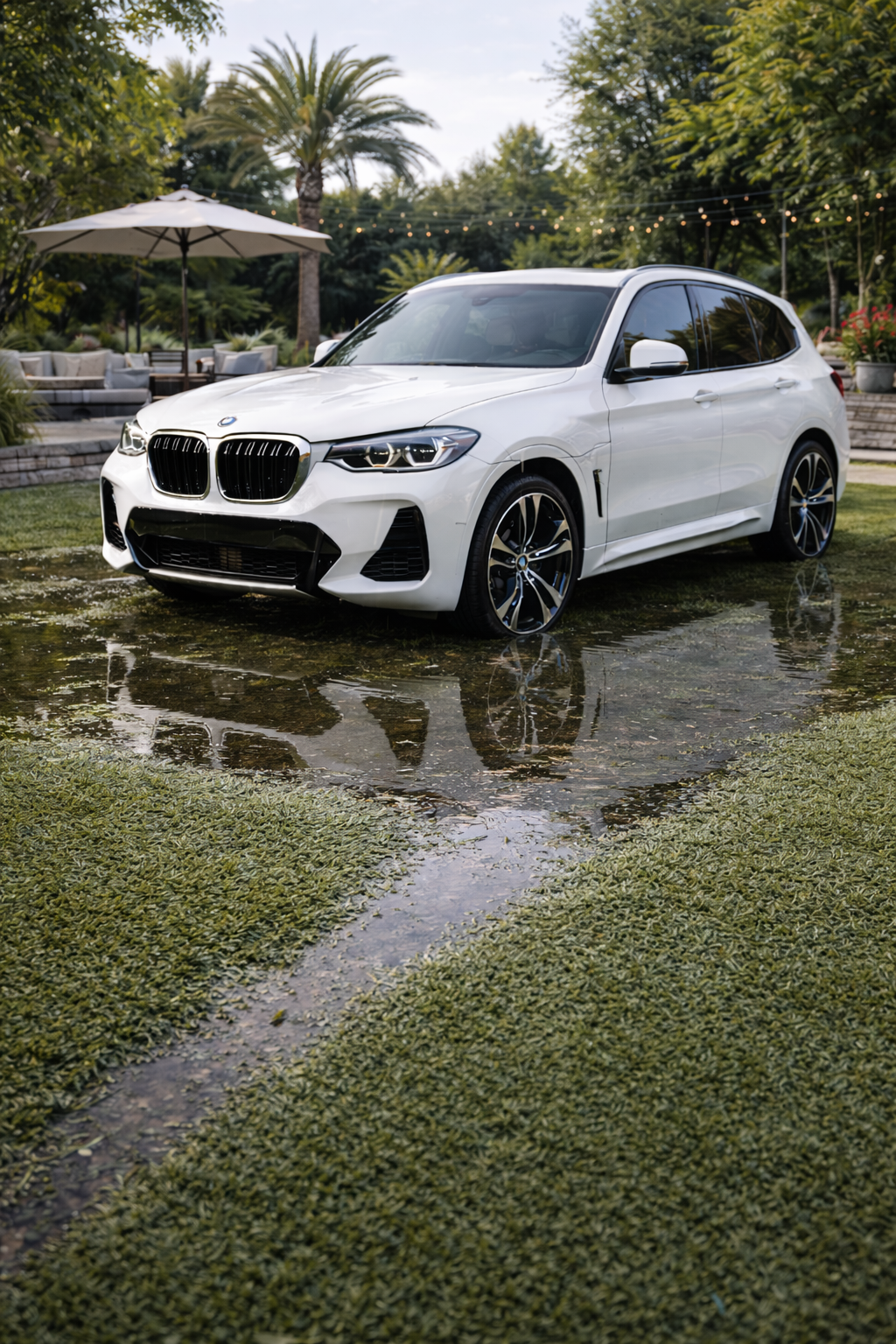
Water buildup → mold → backing separation → lifespan drops drastically.
4. When Can Artificial Grass Be Used in a Driveway?
Use-cases where turf works well:
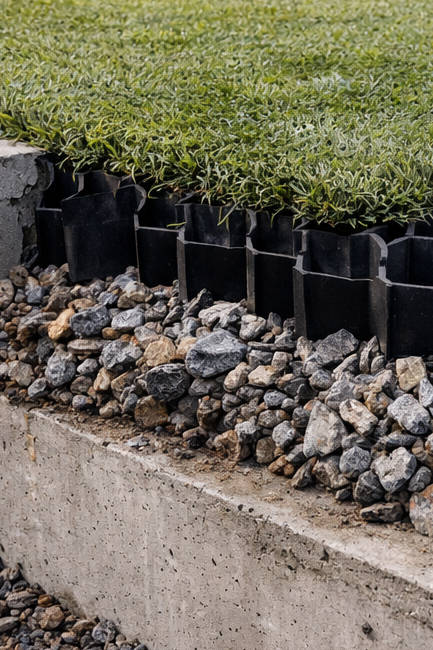
(1) With a strong reinforced base
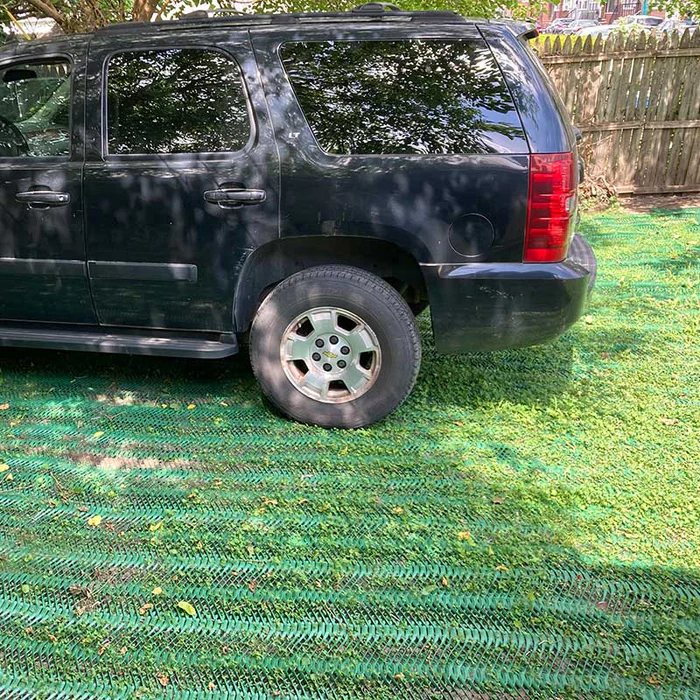
Concrete, compacted aggregate, stabilizing layer, or cellular grid system.
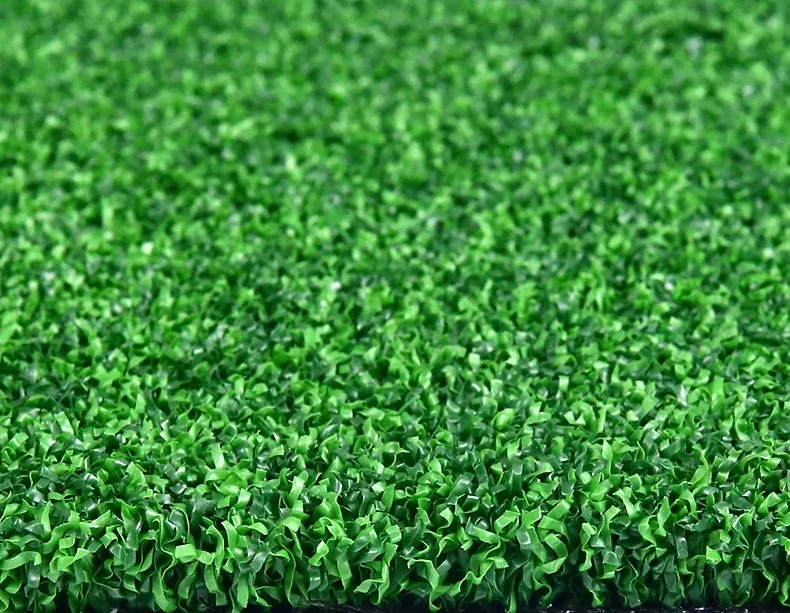
(2)With short, dense, high-strength turf
10–25mm pile height performs significantly better under compression.
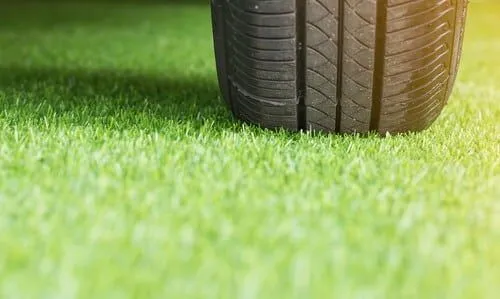
(3)For occasional vehicle traffic
For example: guest parking, light cars, golf carts, e-vehicles.
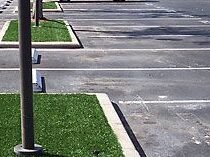
(4)As driveway landscaping, not the main driveway
• Green strips between tire tracks
• Decorative parking zones
• Side borders for visual enhancement
5. Best Type of Turf for Vehicle-Access Areas
| Requirement | Recommended |
| Pile height | Short 10–25mm (more compression-resistant) |
| Backing | PU preferred (more tear-resistant than latex/SBR) |
| Yarn | High Dtex & high density |
| Usage | Decorative driveway finish, not the load layer |
❗ 30–40mm landscape grass is not suitable for driveway use.
6. Base Construction Is the Deciding Factor (Not the Turf)
Recommended Reinforced Structure
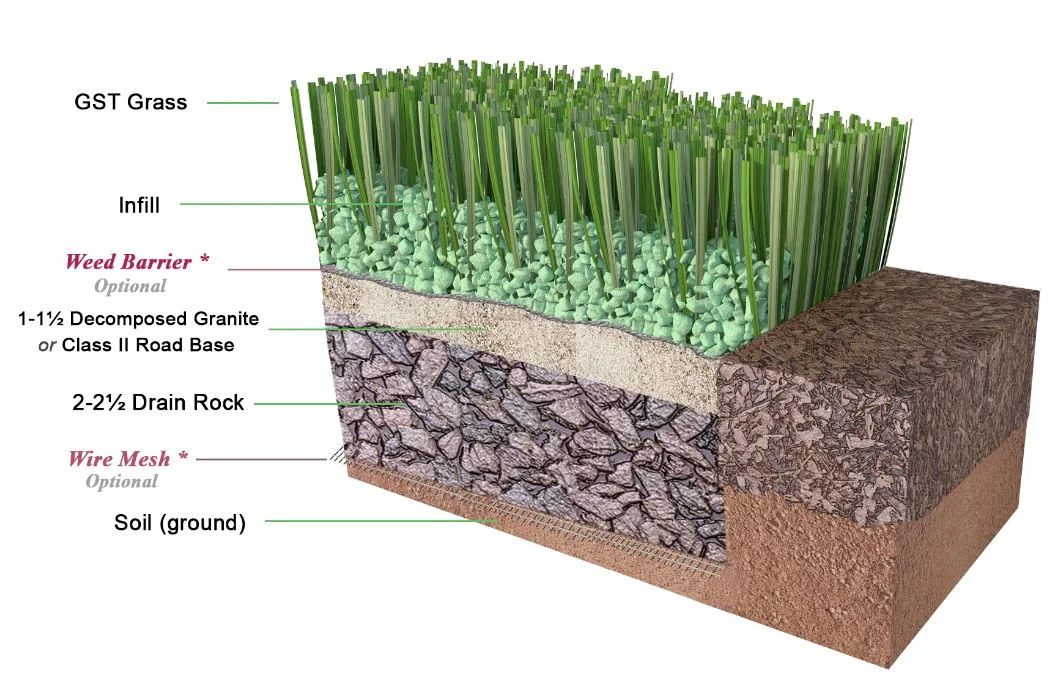
Purpose of each layer:
- Prevents sinking & surface deformation
- Distributes vehicle load evenly
- Protects turf backing from tire torque
- Supports drainage & longevity
📌 Grass covers the driveway visually — it does not carry the vehicle weight.
7. Artificial Grass Driveway vs Natural Grass Driveway
| Item | Artificial Grass (Reinforced) | Natural Grass |
| Load capacity | ✔ Can handle light traffic | ✘ Easily damaged |
| Maintenance | ✔ Low | ✘ High |
| Mud & mess | ✔ None | ✘ Muddy when wet |
| Weather use | ✔ All-season | ✘ Limited |
| Parking suitability | ✔ Occasional only | ✘ Not suitable |
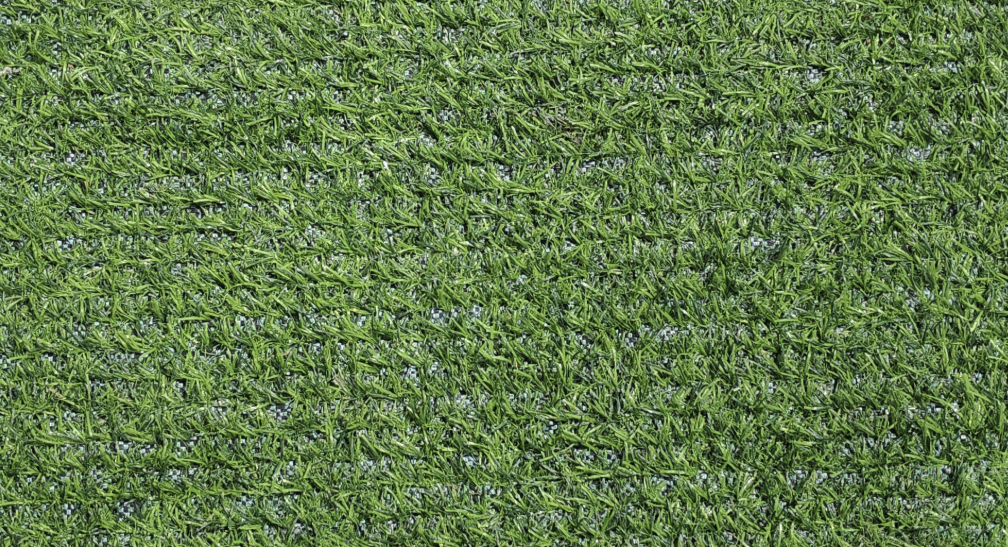
8. Common Mistakes to Avoid
9. Who Is Artificial Grass Driveway Suitable For?
Good fit ✔
- Homeowners who want a green driveway look
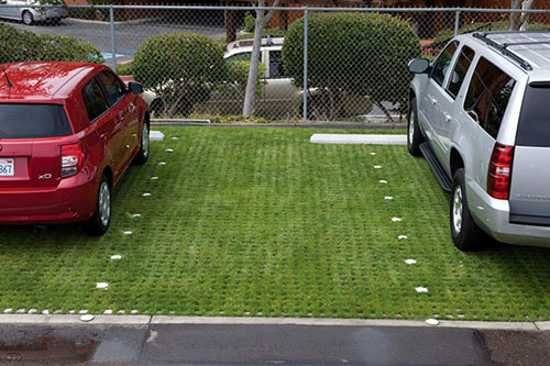
- Occasional light vehicle traffic
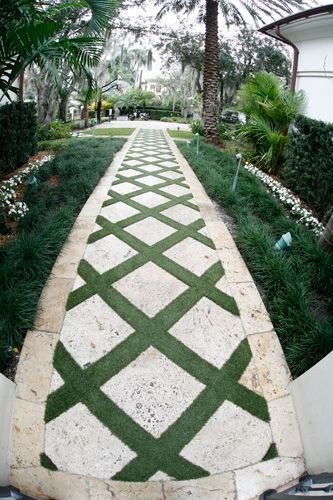
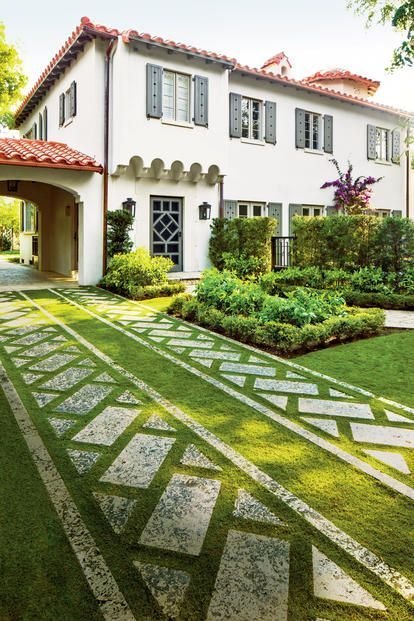
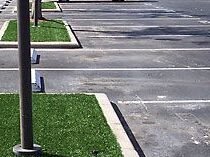
- “Wheel-track driveway” design (two strips + turf in between)
- Decorative parking areas
Not suitable ✘
- Daily parking surface
- Commercial/high-traffic use
- Heavy vehicles
- Areas without proper sub-base reinforcement
10.Conclusion: You Can Drive on Artificial Grass — But It’s Not a Standard Driveway Surface
Key points recap:
- It is possible to drive on turf only with a solid reinforced base
- Turf is not a load-bearing driveway material
- Use it for decorative driveways, occasional access, green appearance
- Proper installation is the difference between 10-year use vs 2-month failure
Artificial grass works beautifully for aesthetic driveway design — not as a concrete replacement.